Our newsletter spotlight typically highlights major global trends shaping the transition to zero-emission trucks and buses. But this month, I’d like to zoom in on one country that is rapidly becoming impossible to overlook: India. With its vast market potential and growing leadership in clean transport, India is an emerging global powerhouse in this sector and increasingly defining what the future of zero‑emission freight could look like. This focus feels especially timely.
In recent weeks, Drive to Zero has engaged closely with partners and government agencies in Mumbai and Delhi—including NITI Aayog, the Ministry of Power, the Ministry of Heavy Industries, the Ministry of Road Transport & Highways, and Global MOU endorser Transvolt. These conversations underscored both the scale of India’s opportunity and the momentum building across its ecosystem.

Stephanie Kodish (Drive to Zero) and Archana Mittal (NITI Aayog)
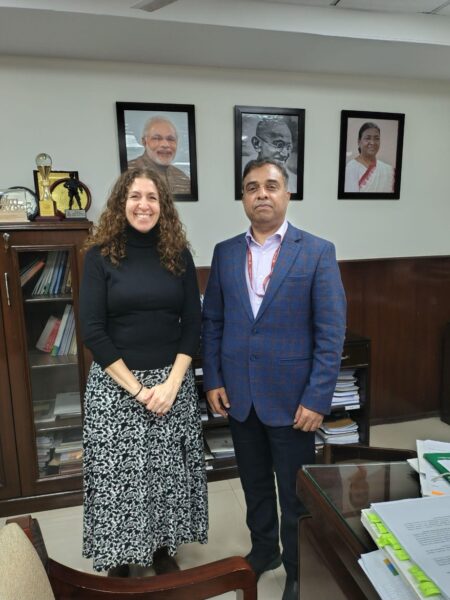
Stephanie Kodish (Drive to Zero) and Dr. Hanish Qureshi (Ministry of Heavy Industries)
A few examples of India’s market driving actions:
- Policy: The government has proposed fuel efficiency standards for heavy-duty vehicles, working on BS-VII emission norms, and established an ambitious goal of achieving 30% EV penetration by 2030. These actions align with Prime Minister Modi’s ‘Viksit Bharat 2047,’ an overall vision for advancing energy security and energy independence through exponentially reducing reliance on oil imports by 2047. They also align with the goals of the Global MOU.
-
Infrastructure: India is also advancing national bus and freight electrification through ‘Faster Adoption & Manufacturing of Electric Vehicles (FAME)’, ‘PM Electric Drive Revolution in Innovative Vehicle Enhancement (PM E-DRIVE)’, ‘PM-eBus Sewa’, and ‘PM e-Bus Sewa-Payment Security Mechanism (PSM)’, schemes. They are designed to incentivize adoption of electric and zero-emission vehicles through demand incentives, infrastructure development, and technology support.
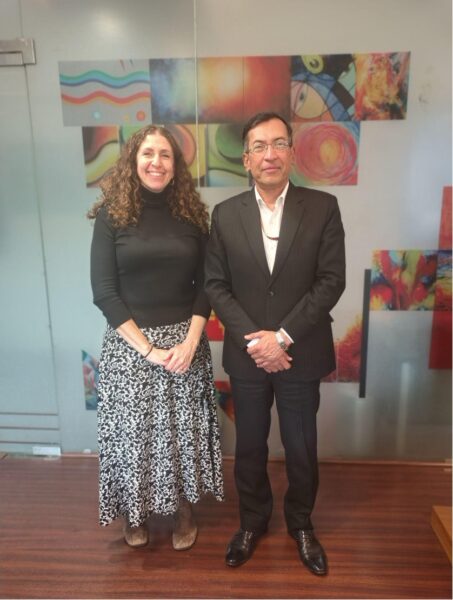
Stephanie Kodish (Drive to Zero) and Mahmood Ahmed (Ministry of Road Transport and Highways)
- Finance: India has allocated more than $5 billion (USD equivalent) in direct and indirect public incentives to grow its ZE-MHDVs ecosystem. The Indian market has also developed demand aggregation models, gross cost contracts, Public Private Partnership (PPP) models, payment security mechanisms, green bonds, and other financial mechanisms to support the deployment of ZE-MHDVs.
From policy engagement to business leadership, the Global MOU community is a major player in the advancement of India’s ZE-MHDV market.
-
Policy Engagement: Following the Bureau of Energy Efficiency’s draft HDV regulation, Drive to Zero mobilized an industry coalition of 11 endorsers calling for efficient, low-carbon freight standards.
-
Business Leadership: Global MOU endorser Transvolt has issued Sustainable Green Bond to Alternates, AXIS AIF (part of Axis AMC with AUM over USD 40 billion). The Green Bond will be used to deploy more than 300 heavy commercial EVs for public and freight transportation. Transvolt’s innovative business model also includes supplying companies with ZE-MHDVs as a service. It supplies the vehicles, infrastructure, and drivers, who receive equitable wages.
- Derisking: Drive to Zero is working with Small Industries Development Bank of India (SIDBI) in setting up DRISHTI—De-risking SMEs in Sustainable Trucking & Infrastructure for India. The risk-sharing facility is aimed to strengthen domestic NBFCs (Non-Banking Financial Companies) and financial institutions to expand access to loans to small owner operators to purchase electric trucks.
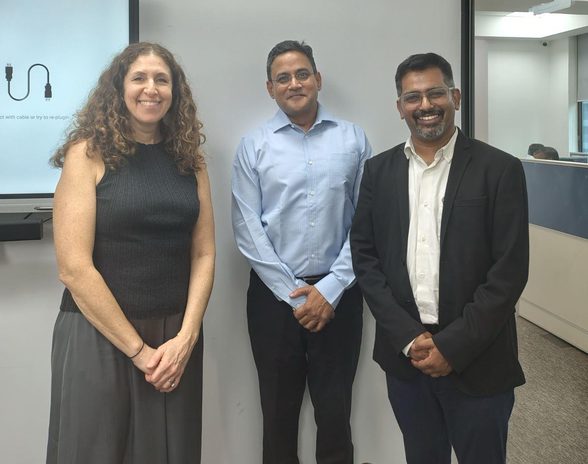
Stephanie Kodish (Drive to Zero), Debasis Mohanty (Transvolt Mobility), and Joseph Teja (Drive to Zero)
India’s freight ecosystem is at an inflection point. Trucks constitute only ~3% of the vehicle stock but consume 55% of diesel, generate 53% of PM emissions, and contribute 35% of transport-sector carbon emissions. Road freight accounted for roughly ~$125 billion of the nation’s annual logistics bill in 2023— and fuel accounted for 42%, roughly $52 billion for fuel alone!
During our recent engagements with the government and private sector, I saw firsthand India’s strategic opportunity and the leadership it is taking to reshape its MHDV sector. It is doing so in a way that aligns with the country’s overall ‘Viksit Bharat 2047’ goals of strengthening energy security, industrial competitiveness, and clean transport leadership. When it comes to the ZE-MHDV market, India is a country to watch. I hope you find these insights helpful as you monitor the global landscape around the ZE-MHDV transition and India’s innovative leadership.
— Stephanie Kodish, Senior Global Director, CALSTART/Drive to Zero
Special Features
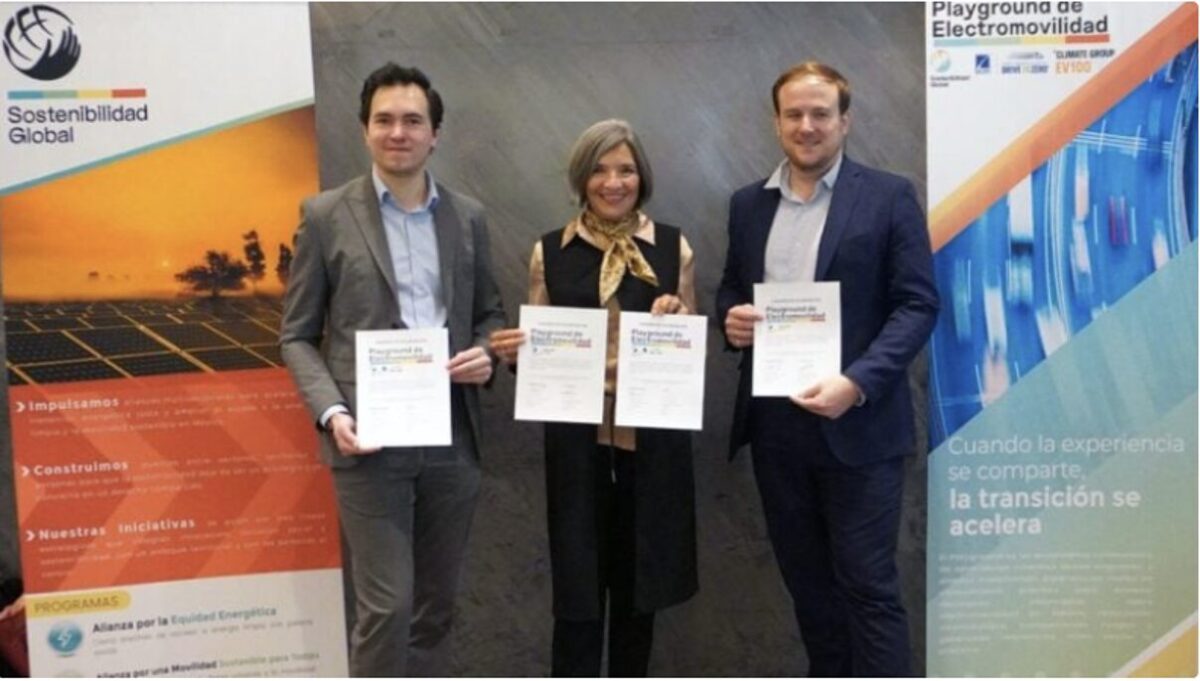
Electromobility Playground launch at Club 51 in Torre Mayor, Mexico City. Photo credit: Revista Transportes Y Turismo.
Mexico’s New Electromobility Playground
Drive to Zero, Sostenibilidad Global, and Climate Group have launched the Electromobility Playground in Mexico, an exciting initiative enabling companies to overcome common obstacles by leveraging learnings and experiences from each other; focusing industry know-how on practical solutions that have already worked within the country. The Playground will help grow zero-emission freight in Mexico, along with the economic, jobs, energy security, clean air, and climate solutions they deliver.
Learn more about the Electromobility Playground in Revista Transportes Y Turismo.
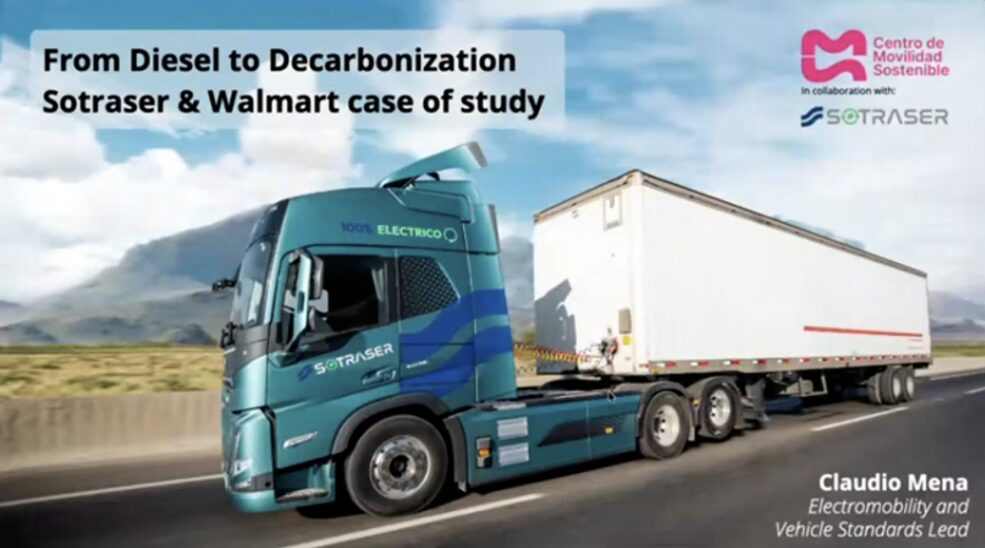
Global MOU Community Spotlight: Sotraser Charges Up Change with Walmart
Together, Walmart and Sotraser, a major Chilean logistics company, are charging up change in Chile—and quickly. Within less than a year, they’ve partnered to deploy fifty electric trucks, twenty charging stations, and 1,200 kW installed renewable power. The trucks, which travel an average of 200+ kilometers per day, service Walmart’s more than 400 retail supermarkets across the country. Electric trucks that charge on renewable energy and serve one of the largest retailers in the world—that’s what changing transportation for good looks like. For more information, watch this presentation by Centro de Movilidad Sostenible’s Electromobility and Vehicle Standards Lead, Claudio Mena.
Welcome our amazing new Global MOU Endorsers!
|
|
|
 |

Upcoming Events
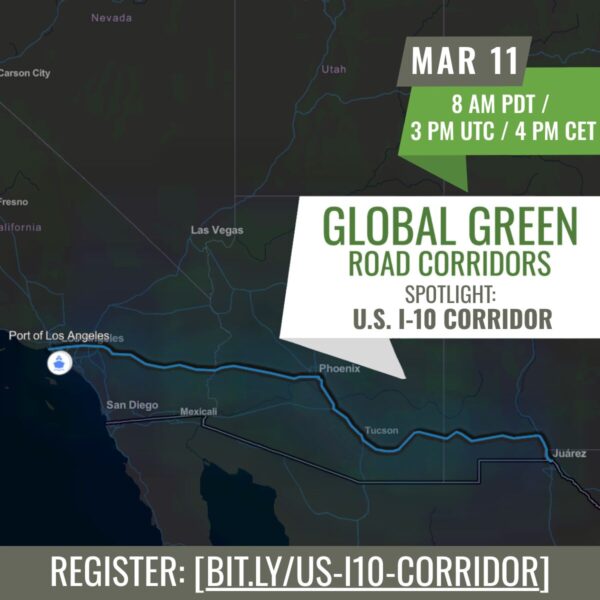
Virtual Event: Greening the U.S. 1-10 Corridor
Through a series of virtual events, the Global Green Road Corridors Initiativespotlights the development of green freight corridors around the world. Next up: On March 11th, we’ll spotlight a major initiative, led by Smart Freight Centre and Terawatt Infrastructure to green the Interstate 10 (I-10) corridor. This corridor—which runs from Los Angeles, California to El Paso, Texas— is one of the busiest and most strategically important trade routes in the United States. SFC and Terrawatt are working with major companies such as PepsiCo and Microsoft to launch the new corridor by 2027.

Mobility Portal Media Opportunities—Inquire Today!
Drive to Zero is proud to partner with Mobility Portal to provide key insights on the global transition to zero-emission trucks and buses. Interested in contributing your expertise or sharing your story as part of this collaboration? Contact Ricardo Garcia at rgarciacoyne@calstart.org to learn more.
Top Headlines

Market
Fleet Deployments
- Major electric bus boost announced for Exeter in £29.3m Devon investment
- Dachser deploys BYD electric trucks in Spain
- Battery-electric transport in Chile: First Mercedes-Benz eActros 600 delivered to customer
- Île-de-France launches Tzen 4 BRT with 24m Hess e-buses and Alstom ground charging
- We have the largest fleet of electric trucks in the Austrian waste management industry
- New Flyer to supply further 100 Xcelsior hybrid and BEV buses to Washington Metro
- 68 electric Yutong buses deployed in Milan and Cortina for Winter Olympics
- MZA Warsaw extends its order with 79 additional Solaris electric buses
Manufacturers and Models: Trucks and Buses
- DLL enters into partnership with BYD Europe to accelerate eMobility adoption across Europe
- AxTrax 2 LF: ZF Secures major India city bus order
- Tesla reveals major info about the Semi as it heads toward ‘mass production’
- KIA PV5 pickup launched in South Korea, van spied testing in US
Financial Incentives
Fuels and Infrastructure
- Pilot Travel Centers to deploy heavy-duty EV charging stations for Tesla Semis
- Electric trucks demonstrate megawatt charging in sub-zero temperatures
- Daimler Buses to install its own public charging stations at Munich Central Bus Station
- WattEV expands San Bernardino depot with Megawatt chargers
- Orion announces $4M project to install 105 EV charging stations for Boston public schools