
CALSTART’s Drive to Zero and Global Memorandum of Zero-Emission Medium-and-Heavy-Duty Vehicles (Global MOU) signatory countries and endorsers will soon gather for the Global MOU Forum 2026 in Santiago, Chile. Our goal: accelerate the next phase of the worldwide transition to affordable, accessible, and operationally superior zero-emission medium- and heavy-duty vehicles.
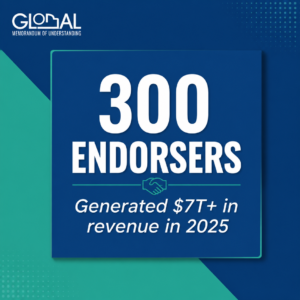 Before the event, I’d like to celebrate the growth, depth, and impact of our Global MOU community. We recently achieved a major milestone: 300 total endorsers! Our endorsers—which include subnational governments, manufacturers and suppliers, fleet owners and operators, utility and infrastructure providers, finance institutions, and knowledge partners — generated more than $7 trillion in revenue in 2025.
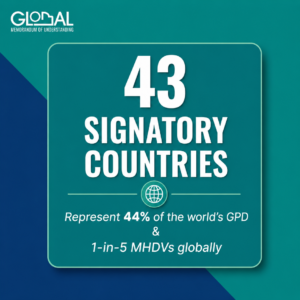 Forty-three countries have signed the Global MOU. They range in size and stretch across continents from small island nations including Curaçao and Seychelles to leaders from Europe, Latin America, and Africa including Norway, the Netherlands, Mexico, and Ethiopia, to major global powers such as the United Kingdom and Brazil.
Together, these leading-edge countries represent 44% of the world’s GDP and 1-in-5 MHDVs globally. They span five continents:
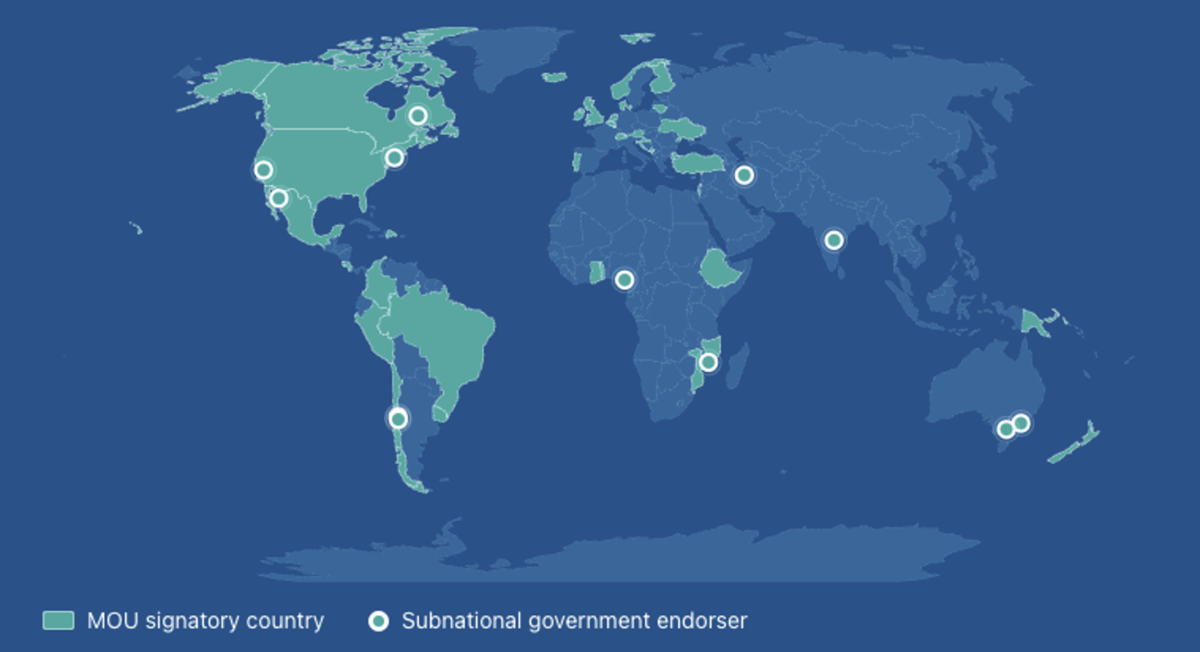
The Global MOU community is strong, diverse, and impactful. When we come together every year for the Global MOU Forum, real transformation happens. We solve problems, share key knowledge, and forge new partnerships, all in service of building a better and brighter future for generations to come.
Across the Global MOU community, this collaboration is translating into action: from Colombia’s launch of Ruta-E, one of Latin America’s first large-scale zero-emission freight corridors; to India’s industry coalition uniting around recommendations to strengthen national vehicle efficiency and electrification policies; to partnerships in Africa advancing electric freight on key transport corridors and helping utilities prepare for the transition. In Europe, countries are also learning from one another’s experiences implementing policies such as the Eurovignette to accelerate zero-emission trucking. Sustainable and equitable economic growth. Jobs. Energy security. Clean air. A stable climate. This is what we are achieving together.
— Stephanie Kodish, Senior Global Director, CALSTART’s Drive to Zero
Upcoming Events
🗓️ Global MOU Forum Registration Deadline: Thursday, August 27

Thursday, August 27 is the last day to register for the Global MOU Forum 2026. From workshops and ZET Talks (our version of TED Talks) to networking opportunities and a clean truck showcase, everything about the Forum is designed to help us reach our shared goal: 100% new zero-emission MHDVs by 2040. Don’t miss this opportunity to gain key information and insights to help shape your country’s— and the world’s—clean transportation future.
Special Features
🌎 Welcome to Our New Global MOU Endorsers!
|
|
|
 |
|
|
|
 |



|
|
|
 |

Join them — endorse the Global MOU today!
🇰🇷 Korea Proposes CO2 Standards for MHDVs
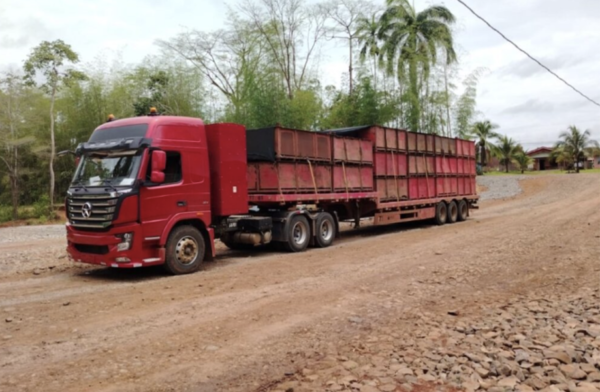
Photo: Carl Kho on Unsplash
The Korean Government has released draft regulations introducing mandatory CO₂ reduction standards for medium- and heavy-duty vehicles starting in 2027, with phased implementation through 2030. The regulation requires manufacturers to achieve a 30% reduction in average GHG emissions by 2030 (relative to the 2021–22 baseline), while continuing to incentivize battery-electric and hydrogen trucks and buses through super credits. The proposal also incorporates lifecycle emissions by allowing manufacturers to offset a portion of their compliance obligations through renewable electricity used in domestic vehicle manufacturing. The draft is open for public consultation until 14 September 2026.
🇧🇷 Accelerating Brazil’s Transition to ZE-MHDVs
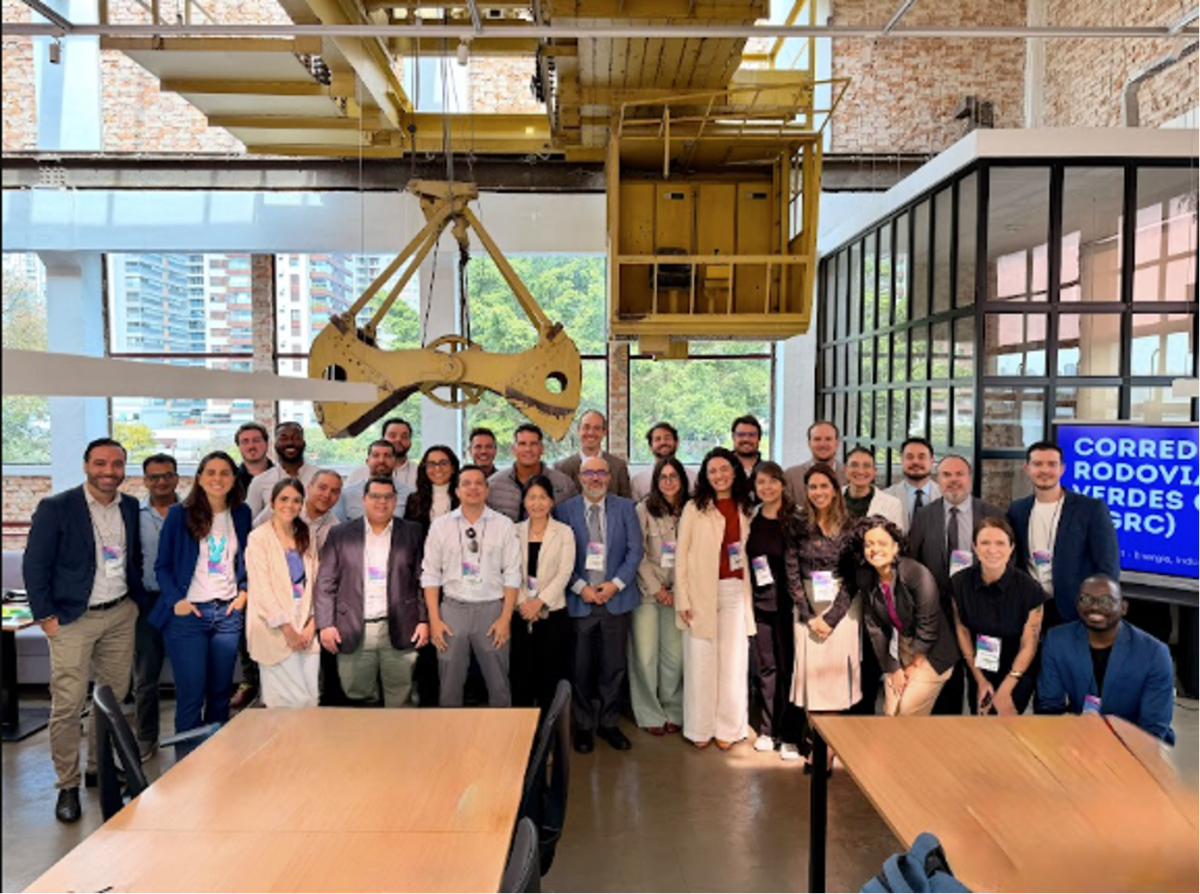
Photo: Drive to Zero’s Brazil lead Isabela de Siqueira provided her expertise to a series of events at São Paulo Climate Week and the ESG Supply Summit.
Drive to Zero’s Brazil lead Isabela de Siqueira participated in a series of events at São Paulo Climate Week and the ESG Supply Summit with top level government officials and industry leaders, including:
- Aloisio Melo, National Secretary for Climate Change, Ministry of the Environment and Climate Change (MMA)
- Danilo Perecin, Director of Energy, São Paulo State Secretariat of Environment, Infrastructure, and Logistics
- Thiago Casagrande, Senior Environmental Engineer, Ministry of Transportation (MT)
- Saori Yano, Head of Sustainability for Brazil Operations, Amazon
- Priscila Rocha, Head of Sustainability, Volkswagen Truck & Bus
- Gustavo Bonini, Director of Institutional Relations, Scania
- Matheus Baraúna, Vale’s Senior Investment Officer for Decarbonization Projects
- Approx. 40 members of the e-Dutra coalition

Photo: Drive to Zero’s Brazil lead Isabela de Siqueira provided her expertise to a series of events at São Paulo Climate Week and the ESG Supply Summit.
The goal: Accelerate Global MOU signatory Brazil’s transition to ZE-MHDVs. Key takeaways included:
- Fleet electrification is not only a decarbonization strategy, but also an industrial and economic opportunity for Brazil, with potential to strengthen domestic production, attract investment, and develop new value chains.
- Stronger public-private coordination is essential to translate corporate demand and public policy objectives into deployment at scale.
- Green freight corridors provide a practical framework to coordinate the different pieces of the transition — vehicles, charging infrastructure, energy, policy, and business models — around a specific geography.
- Financial instruments, including Brazil’s Climate Fund, are critical to reducing investment barriers and supporting the transition from pilots to larger-scale deployment.
For even more insights from these events, click the button below.
🔌 New Endorser Spotlight: BasiGo
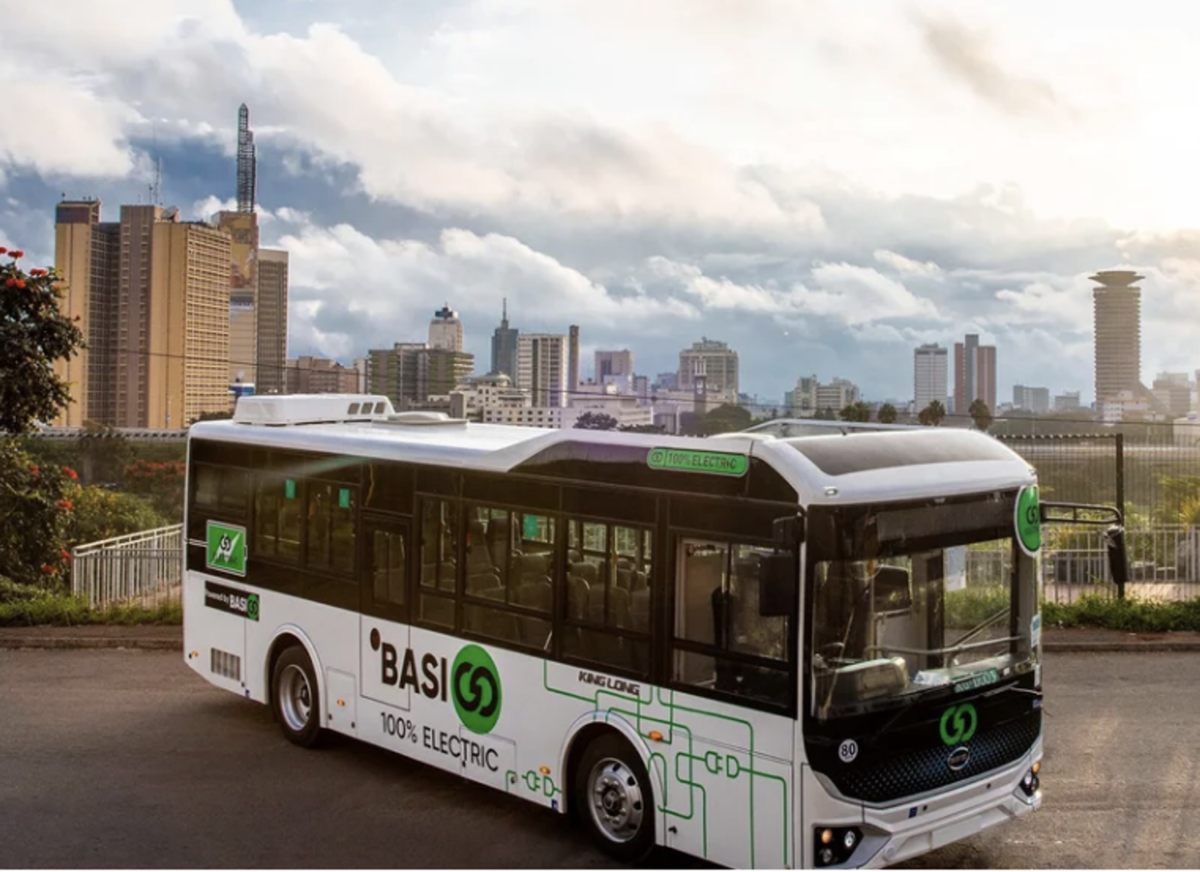
Photo: BasiGo
As Africa’s population and economy grow, so will its need for public transport.
New Global MOU endorser BasiGo is making Africa’s public transportation system sustainable and affordable. The company assembles electric buses and vans, offers a pay-as-you-drive financing model, and provides access to a convenient and reliable charging network powered by renewable energy. For passengers, BasiGo E-Buses offer a radically new bus experience, one that is quiet, clean, and comfortable.
BasiGo is already having a big impact. Let’s look at the numbers:
- 152 electric vehicles in operation (E-buses and e-vans)
- 13,631,438 electric kms driven
- 16,112.13 tons of CO2 emissions avoided
- 2,891,258 litres of diesel avoided
- 14,078,814 passengers carried
BasiGo is creating a future of clean, electric public transport in Africa – now that’s Charging Up Change!
⚡️ Showcase Your Energy Storage Technology on the World Stage!
The Utilities for Net Zero Alliance (UNEZA) is accepting applications for the inaugural Global Energy Storage Flagship Project. Through this project, energy storage leaders will have the opportunity to raise the visibility of their energy storage technologies. Selected projects will benefit from enhanced international visibility through UNEZA’s official communication channels and global member network, as well as planned showcasing opportunities at high-profile international events, including UNEZA events at COP31, IRENA Innovation Week, and the APEC ABAC meeting.
📧 To apply to participate in the program, please contact Carina Daniels at carina@storyandreach.com and she will send you the application.
🎥 Global MOU Community Resource: The Residual Value Guarantee Blueprint
A major obstacle to the adoption of electric trucks is lower residual values when compared to their diesel counterparts. In The Residual Value Guarantee Blueprint, CALSTART and Green Finance Institute offer solutions. By providing lease originators with Residual Value Guarantees—the option to recover potential losses if their vehicle sells for less than expected when a lease ends—they are more likely to invest in these vehicles, assign them a higher residual value, and lease them out at lower monthly payments, providing more affordable options for fleet operators. According to new modeling, a $13.3 million Residual Value Guarantee could unlock $304 million in investments in electric trucks, lead to the deployment of nearly 2,200 medium-duty trucks, and reduce leasing costs by 12%.
To learn more, watch GFI’s presentation on this project:
Top Headlines

Market
- PowerFlex and The Mobility House North America Combine to Create North America’s Leading Fleet Charging and Energy Management Platform
- New commercial vehicle registrations: vans +1.9%, trucks +9.8%, buses +22.7% in H1 2026
- Einride to Acquire Charging and Energy Software Company Flipturn, Creating North America’s Largest Heavy-Duty Charging Network
Fleet Deployments
- Menzies Puts First Battery-Electric HGVs Into Commercial Service Under eFREIGHT 2030
- Romania once again chooses zero-emission Solaris buses
- Pflaum invests in 30 electric trucks
- HOYER Switzerland expands e-truck fleet
- Zurich City Council to Purchase 20 New Electric Buses from Yutong & Daimler
- M&S Takes Another Step Towards Net Zero with Launch of First of its Kind Electric Truck
- JK Cement to deploy over 150 electric trucks
Manufacturers and Models: Trucks and Buses
- ÖBB Postbus Tests Fully Autonomous Electric Bus in Public Transport
- DAF and Einride partner to accelerate scale-up of autonomous electric freight
- Imagry and UNVI: Autonomous Electric Transit Bus
- MAN starts series production of MCS-ready eTrucks
- New Bosch fuel-cell system begins test operations in Madrid
- SuperPanther begins series production of eTopas 600 electric truck in Austria
- Aurora Launches Second-Generation Driverless Trucks in U.S. to Meet Customer Demand